
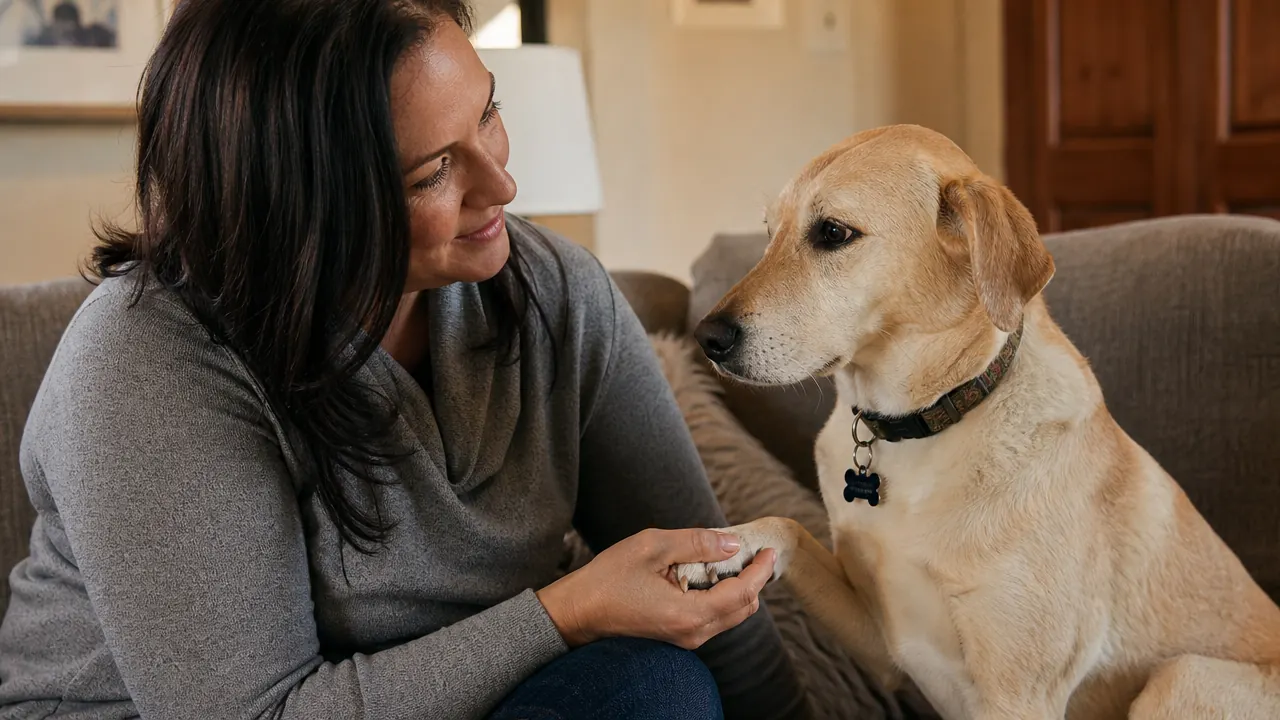
Otis is twelve years old, about 28 pounds, and has spent the better part of a decade figuring out how to make nail trimming my personal nightmare. He shakes. He pulls his paw back the second metal touches his nail. Once, back when I was still using clippers, I quicked him on his left rear dew claw and he bled for four minutes. That was in January 2024, and I did not pick up a clipper again. A friend recommended the Casfuy dog nail grinder, I ordered it the same week, and I have used it on Otis every single Saturday morning since February 2024. That is twenty-six sessions. Here is everything that happened.
The Quick Verdict
For a senior dog with nail anxiety, the Casfuy is the most consistent weekly tool I have found in the budget range. It takes patience to build the habit, but once you do, sessions get genuinely fast.
Amazon Check Today's Price →Still using clippers on a dog who hates them? There is a quieter way.
The Casfuy nail grinder has over 100,000 reviews and runs at two speeds designed for smaller, anxious dogs. If Otis, a beagle who once fainted at the sound of scissors, can sit through a weekly grind session, there is a real chance your dog can too.
Amazon Check Today's Price on Amazon →How I Have Used It
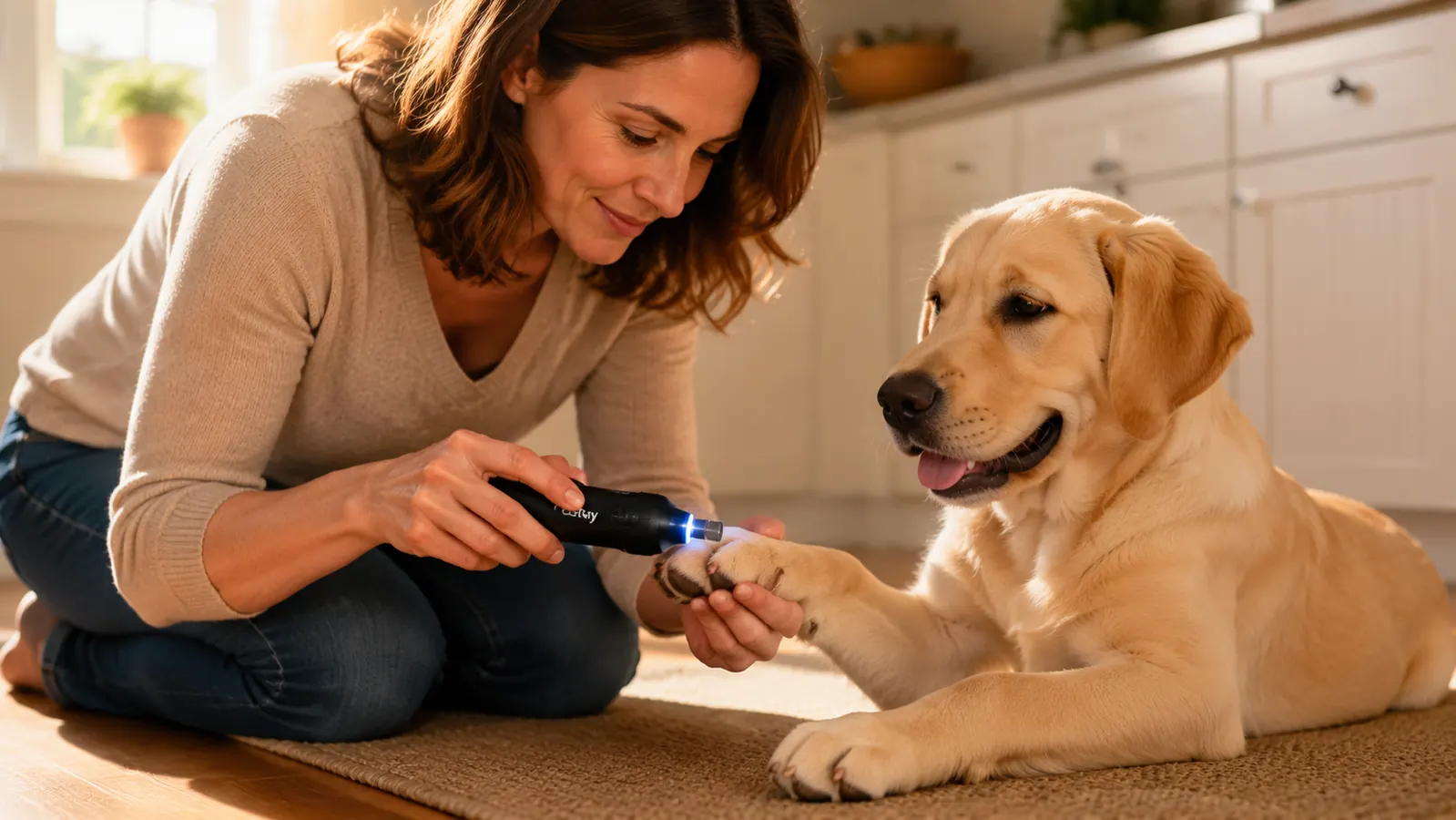
Every Saturday morning, before I pour my coffee, I take Otis to the bathroom, put a folded bath towel on the tile floor, and sit cross-legged with him in my lap. I use the low-speed setting for his front paws, where he is most reactive, and the high-speed setting for his rear paws once he has settled. Each session targets roughly three to four seconds per nail, two passes per nail on the longer ones. In the beginning, sessions ran sixteen to eighteen minutes including breaks. By month four, we were consistently under ten minutes. By month six, I was averaging about seven minutes for all four paws combined.
I charge the grinder for about ninety minutes once per week before use. I have never had the battery die mid-session. The USB-C charging port means I can charge it from my laptop cable, which I appreciate. The replacement grinding bands that come in the box have lasted longer than I expected. I am on my second set of bands after six months of weekly use, which puts consumable cost at essentially nothing on a per-session basis.
I started keeping a simple notepad log in February to track Otis's reaction: would he let me hold each paw, how many breaks did I need, did he growl or try to leave. I stopped logging after week sixteen because the pattern had stabilized and there was nothing new to note.
Weeks 1 Through 4: The Adjustment Phase
The first Saturday was rough. Otis heard the motor before I even touched his paw and leaned hard against my left arm trying to get away. I spent the first session just letting the grinder run while I fed him small pieces of chicken, never making contact with his nails. That counted as session one. By the second week I could touch his front right paw with the grinder running, though he kept flicking his leg back. Week three was the first time I actually removed any nail material. Week four I completed all four front paws for the first time.
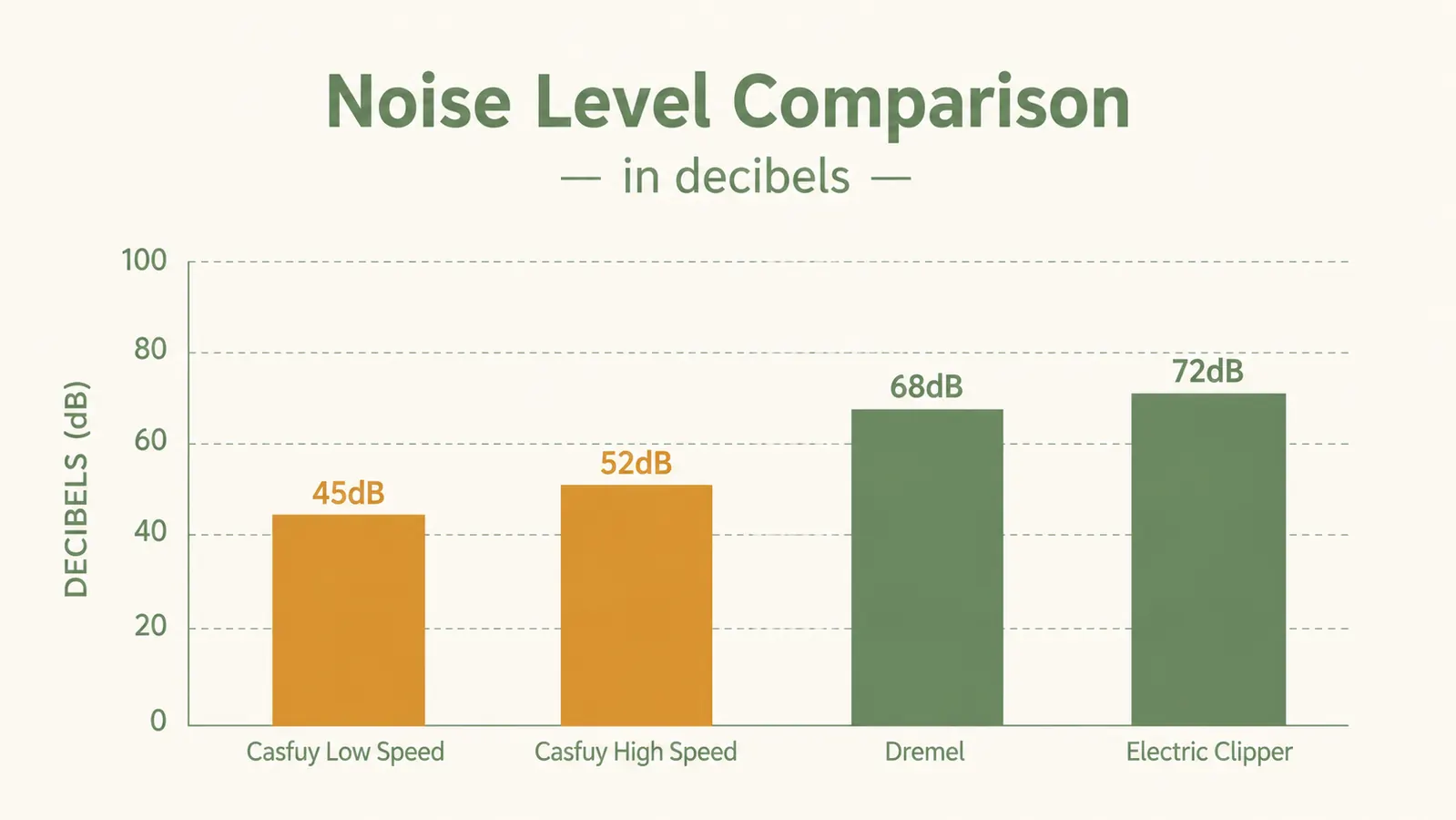
The low-speed setting was essential in this phase. The motor on low sounds noticeably quieter than on high, and at low speed the vibration through the paw is mild enough that Otis would hold still for two to three seconds before pulling back. If I had started on high speed, I do not think we would have made it past week two. His baseline anxiety around grooming is high. The low speed bought us the time we needed.
Months 2 and 3: Building the Routine
By week eight, Otis had stopped trying to leave the bathroom. He still did not love the grinder, but he had accepted that it was going to happen and that nothing bad would follow from it. That shift in his attitude was more important than anything I did technically. Dogs read patterns, and a twelve-year-old beagle who has had the same Saturday morning experience eight weeks in a row starts to treat it like any other inconvenience. He would lie down rather than sit upright, which actually made it easier to hold his paw. He began eating the chicken treats I offered rather than ignoring them, which is a reliable stress indicator in dogs.
During this stretch I noticed the grinder's performance was completely consistent. The motor speed never wavered between sessions, the band did not wear out noticeably, and I had no overheating issues. I had read some reviews online mentioning the motor getting warm during long sessions, and it does get slightly warm after about twelve continuous minutes. But I never run it for twelve continuous minutes. I grind one or two nails, pause, move to the next paw, let Otis shake out his leg. Real sessions are never continuous. If you work in short bursts the way you should with a dog who has anxiety, the heat concern is irrelevant.
By week eight, Otis had stopped trying to leave the bathroom. He still did not love the grinder, but he had accepted that it was going to happen and that nothing bad would follow from it.
Months 4 Through 6: Long-Term Performance
Session times dropped significantly in this phase. By week eighteen I was completing a full grind in under ten minutes without the stopwatch feeling frantic. By week twenty-four I had settled into a seven-to-eight-minute routine that felt sustainable indefinitely. The chart shows the arc clearly: steep improvement in the first twelve weeks, then a long plateau where we just maintained.
What surprised me most about the long-term experience was how consistent the motor held up. I expected some degradation in torque or battery life by month five. I did not get it. The grinder on week twenty-six behaves identically to how it behaved on week one. Battery life in particular has not declined. I still get three to four full sessions per charge, which at one session per week means charging it once a month would technically be enough. I charge it weekly out of habit, but the battery headroom is there.
The diamond-grit grinding band, at six months, is on its second replacement. The first band lasted about fourteen weeks before I noticed it was taking slightly longer per nail, which is when I swapped it. The replacement bands Casfuy sells are not expensive and are widely available. This is not a proprietary consumable that locks you into a markup.
Ingredient and Feature Deep-Dive: What Actually Matters
The Casfuy runs a small brushless motor with two speed settings. Low speed is listed at about 6,000 RPM, high speed at about 8,000 RPM. For context, a Dremel 7300 runs at 6,000 and 13,000 RPM. That upper end difference matters for dogs with thick nails, and I will come back to it. For Otis, a beagle with medium-thickness nails and significant anxiety, the low setting at 6,000 RPM is the working speed. I use high for his rear nails only, where he is calmer and the nails are slightly thicker.
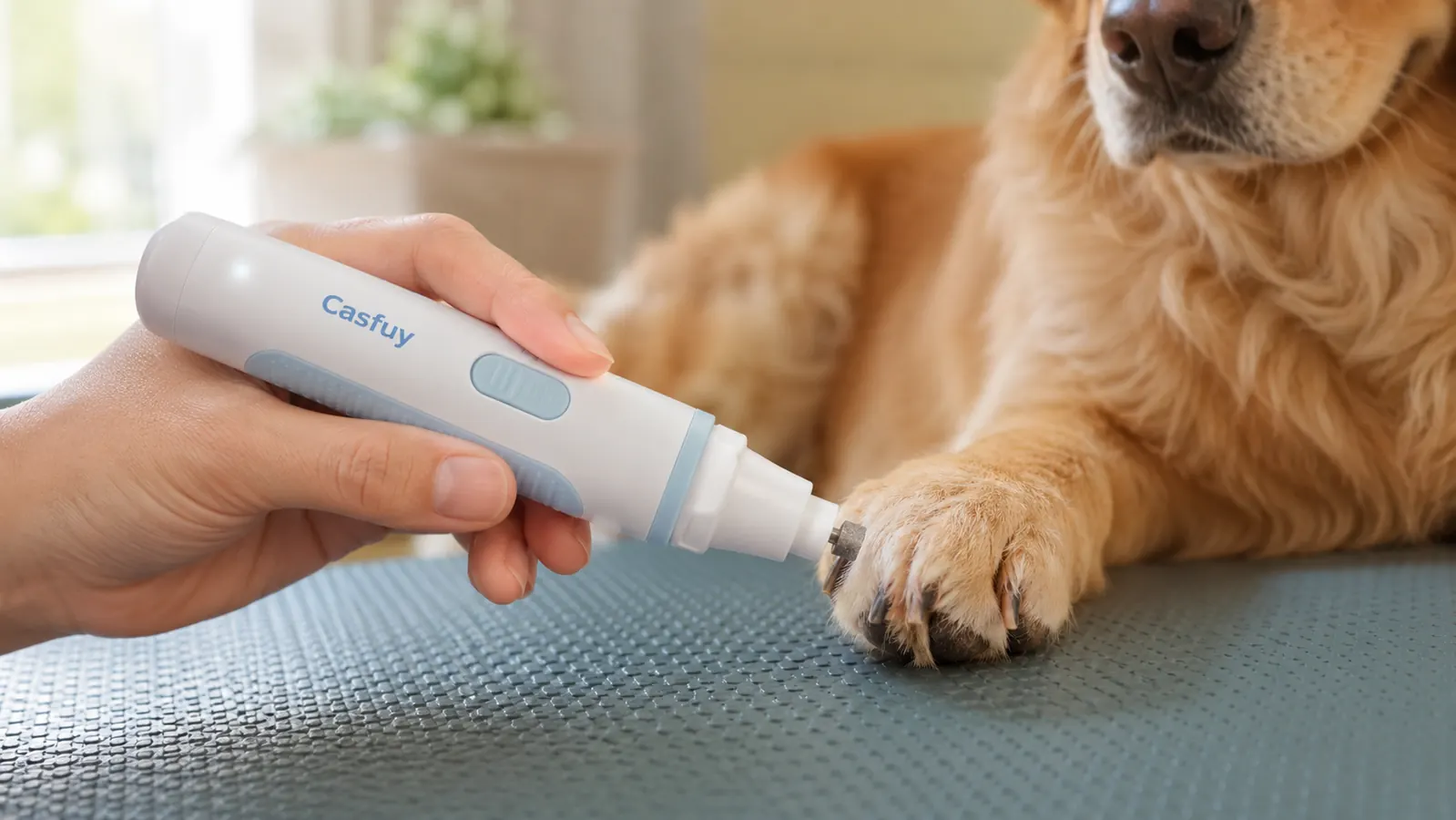
The dust cover is a small plastic cap that sits over the grinding port opening, leaving only a small hole for the nail tip. It reduces dust spray from the nail material significantly. My bathroom counter used to get a visible film of nail dust without it. With the cover on, cleanup is minimal. This is a detail that sounds trivial until you are doing weekly sessions in a small bathroom indefinitely.
The ergonomics are worth noting for long-term use specifically. The grinder is 5.6 inches long and about 1.1 inches in diameter. I can hold it in my right hand with my thumb on the speed switch without repositioning my grip. Over twenty-six sessions, I have had no wrist strain or fatigue, which I can not say about every tool I have used long-term. The weight is negligible. The on/off switch requires a deliberate two-second press to activate, which prevents accidental startups when you set the grinder down mid-session.
Where It Falls Short
The low-speed cap of 6,000 RPM is the real limitation for large-breed owners. Penny, my lab mix, is 58 pounds with significantly thicker nails than Otis. I have used the Casfuy on her a handful of times when I wanted to smooth a nail that was catching on fabric. It works, but it is slow. High speed helps but still feels underpowered for her nails compared to the Dremel 7300 I occasionally use. If your dog is over 60 pounds with thick nails, you will feel this limitation.
The grinding port opening size is designed for small and medium dogs. There are three port sizes included, small, medium, and large. Even the large port felt tight on Penny's thickest nail. For Otis at 28 pounds, the medium port is perfect. This is a tool that lives in small-to-medium territory by design, and the spec sheet is honest about it. The product title mentions small, medium, and large, but in practice the upper end of that range requires patience.
What I Liked
- Genuinely quiet on low speed, tolerable for anxious dogs
- Battery held up through six months of weekly use without capacity loss
- Two-speed design lets you match motor to your dog's anxiety level
- Dust cover is a practical detail that actually reduces mess
- Replacement grinding bands are inexpensive and widely available
- Ergonomic enough for weekly use without hand fatigue
Where It Falls Short
- Underpowered for dogs over 60 pounds with thick nails
- Large port opening is still tight on genuinely large nails
- Motor gets warm after twelve-plus continuous minutes (relevant if you do not take breaks)
Who This Is For
This grinder is the right tool for anyone who has a small to medium dog, meaning under 50 pounds, who is anxious around traditional clippers. It is also the right tool if you have had a quicking incident and want to eliminate the risk entirely. The grinding method removes a very thin layer of nail at a time. It is physically impossible to cut a blood vessel the way a clipper can. For dog owners building a home grooming routine for the first time, the lower stakes during the learning curve is worth a lot. I would also specifically recommend this to owners of senior dogs. Older dogs that have never tolerated nail trims often do better with the grinder because the sensation is gentler and less sudden than a clipper blade.
Who Should Skip It
If your dog is a 90-pound shepherd mix with nails like horn, look at the Dremel 7300 or higher-end options before committing here. The Casfuy will work, but sessions will take longer and the motor will run warm faster than it should with thick nails. Similarly, if you are not willing to spend two to four weeks in the desensitization phase, this tool will frustrate you. No grinder works on an unprepared, actively resisting dog. The tool is not the whole solution. The patience to build the habit is also required, and if you are not up for that, no amount of low motor noise will matter. For a guide on the actual desensitization process, my full step-by-step is at how to grind dog nails without stress. And if you are trying to decide between this and a Dremel, my side-by-side breakdown is at Casfuy vs Dremel nail grinder.
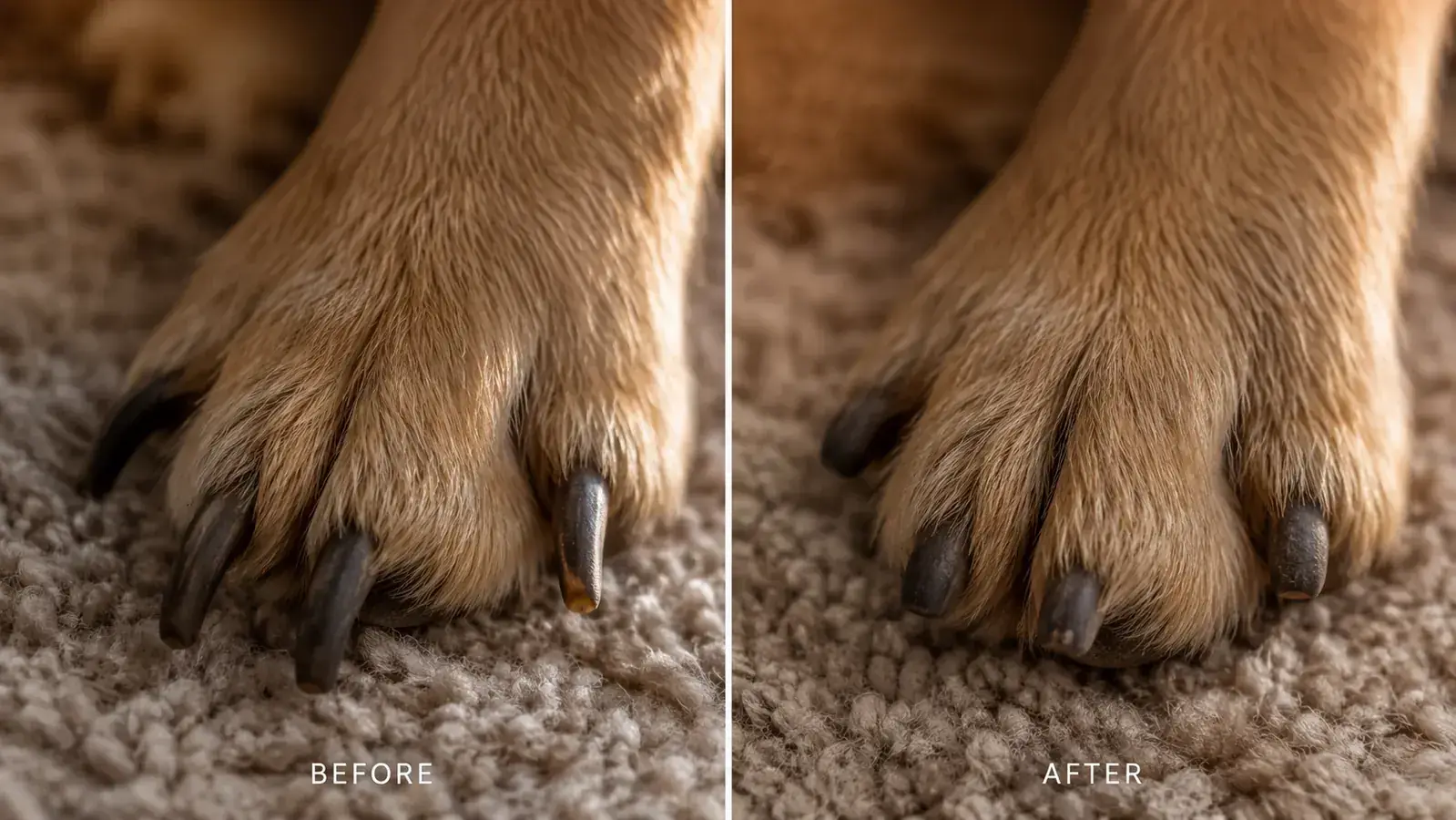
Six months in, I still reach for this grinder every Saturday morning.
If you have an anxious small or medium dog and you are tired of wrestling with clippers, the Casfuy is a practical, low-cost entry into grinding. The habit takes a month to build. After that, it runs itself.
Amazon Check Today's Price on Amazon →