
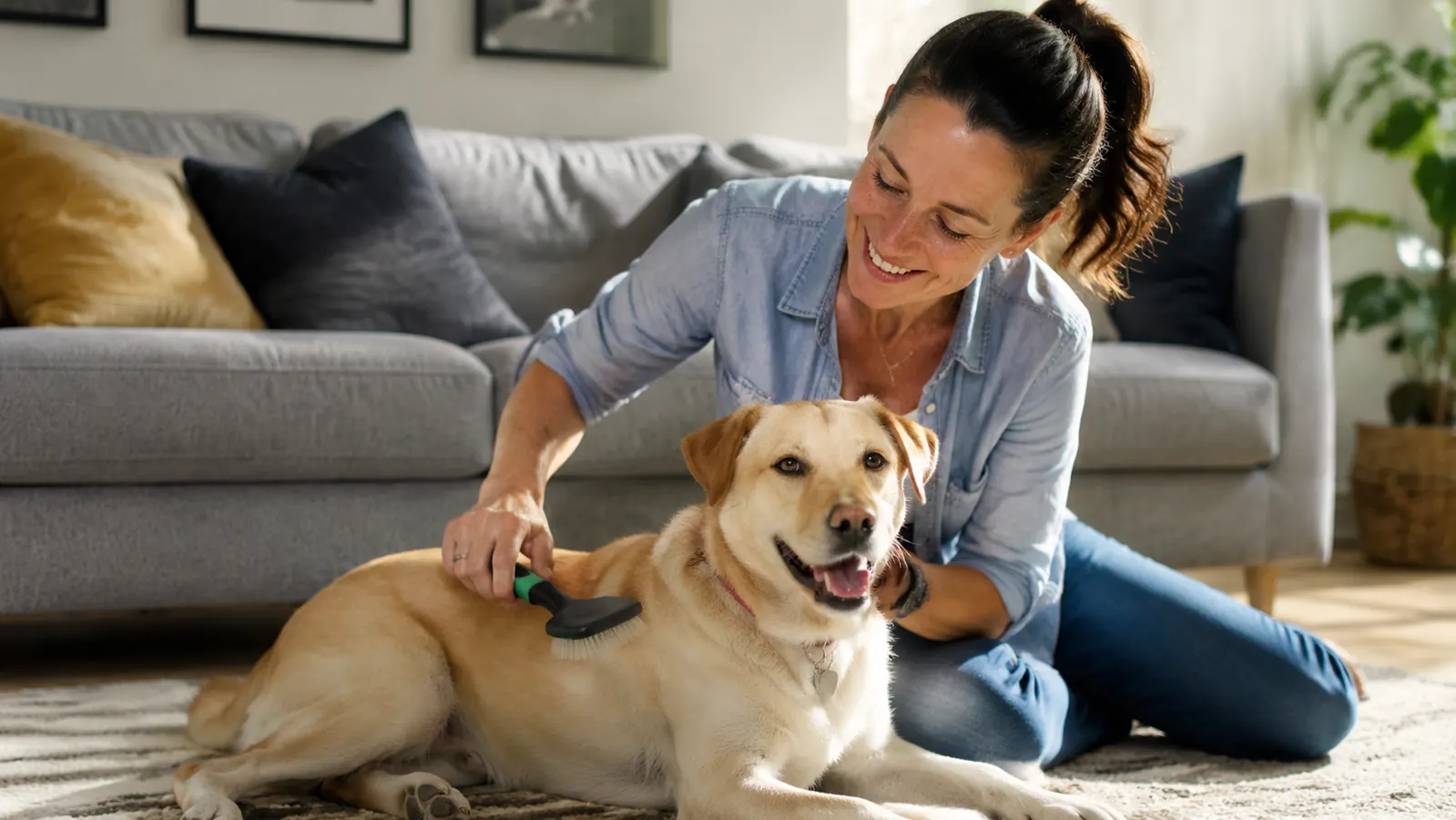
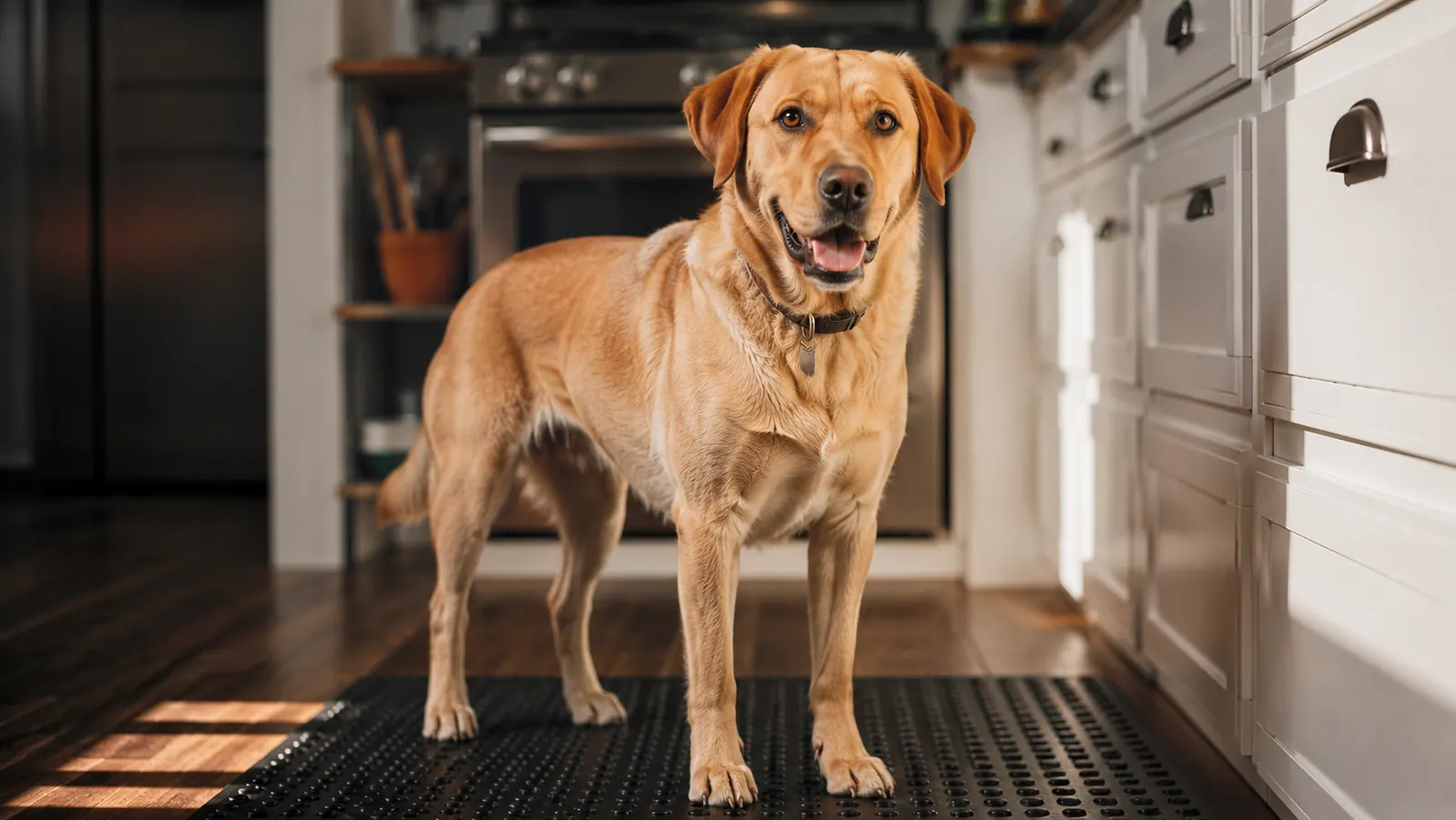
Penny is a two-year-old lab mix, roughly 52 pounds, and she sheds like it is her full-time job. I vacuum the floor every three days and still find short golden hairs in my coffee. When the oneisall grooming vacuum kit arrived, I had realistic expectations: I was not expecting a miracle, just something that captured hair at the source instead of letting it float across the room. What I did not expect was to still be using it six weeks later, with most of the same habits I built in week one still holding.
I am a former vet tech with a fair amount of scepticism about grooming gadgets marketed as one-stop solutions. I also have Otis, a 12-year-old beagle with thin skin who would not tolerate anything aggressive, and Miso, a long-haired cat who treats every new object in the house as a personal insult. This review covers what six weeks of real use on Penny looks like, including suction performance over time, which of the seven attachments I actually reach for, how quickly the 1.5L dust cup fills, and how long it took Penny to settle down when I turned the unit on.
The Quick Verdict
Solid, practical grooming vacuum that genuinely cuts loose hair before it hits the floor; best suited to short-to-medium coats with daily shedding problems, less ideal for anxious dogs or cats.
Amazon Check Today's Price →Still brushing Penny and watching the hair land on the couch anyway?
The oneisall grooming vacuum captures loose fur directly into the canister while you brush, which means less time with the floor vacuum afterward. Check today's price and see if it fits your setup.
Amazon Check Today's Price on Amazon →How I Have Used It Over Six Weeks
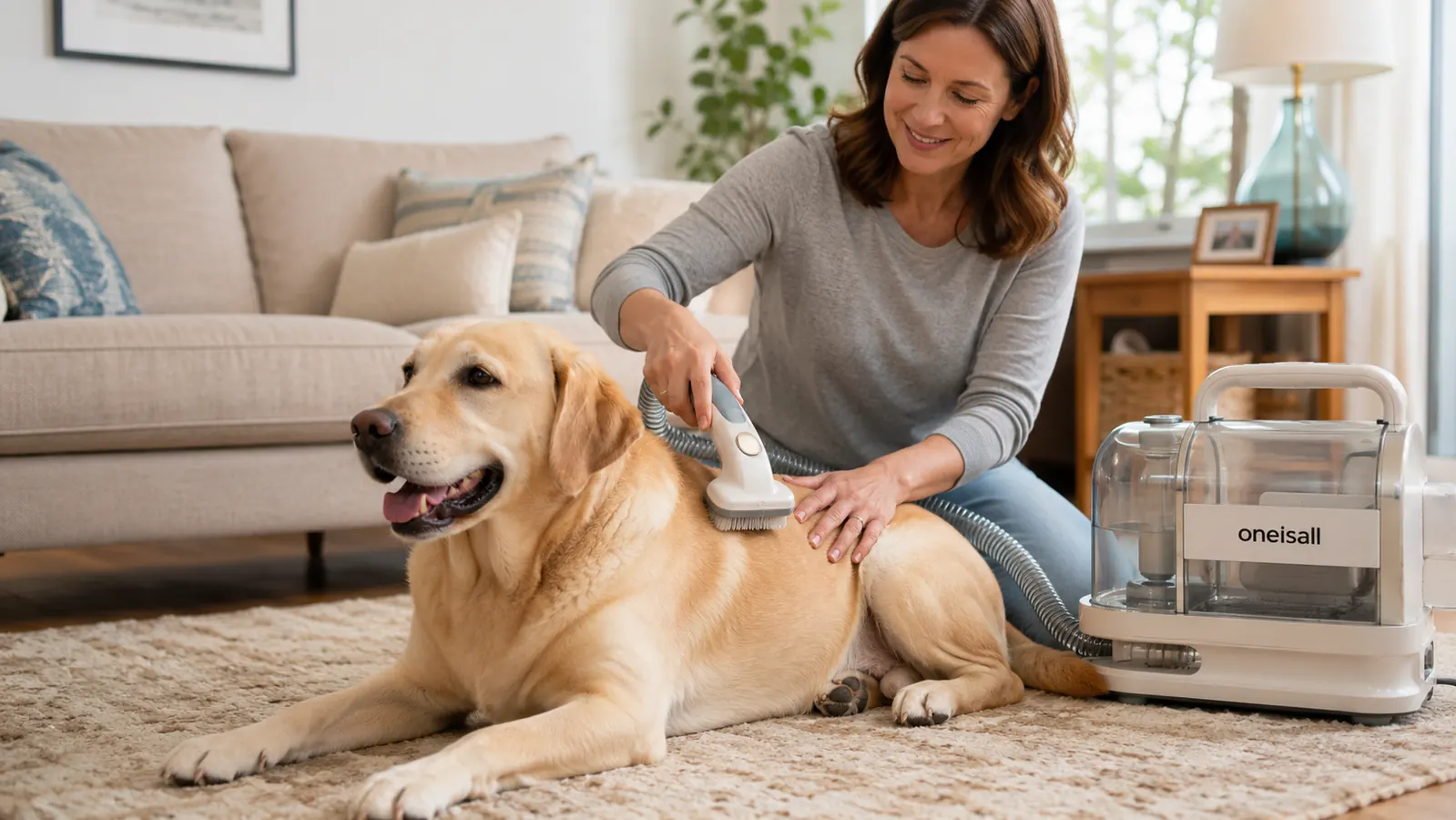
My routine settled into grooming Penny every other day, morning, before she goes outside. Each session runs about eight to twelve minutes on her back, flanks, and hindquarters, which are where the loose undercoat concentrates. I do not try to do a full groom in one pass. I treat it like brushing: a focused pass over the highest-shedding zones, then I let her go. That rhythm meant roughly 21 sessions across six weeks, which is enough data to notice real patterns.
I kept the unit plugged in on the kitchen counter rather than putting it away after each use. That convenience habit turned out to matter more than I expected. Grooming tools you have to dig out of a closet get used less. The cord is long enough to reach the living room from a counter outlet without repositioning, which covers the spots where Penny typically sits for grooming.
Otis got one trial session with the slicker brush attachment, did not love the noise, and I respected that. He is 12 and not a heavy shedder anyway. Miso refused to be within ten feet of the unit for the first two weeks. I did not push it. This review is primarily Penny's story.
The 7 Tools: What I Actually Use and What I Skipped
The kit ships with seven attachments: a deshedding brush, a slicker brush, a grooming brush (wider, softer bristles), a cleaning brush (for furniture and upholstery), a flat nozzle for tight spaces, a nail grinder, and a small hair clipper. In six weeks, I reached for exactly three of them with any regularity.
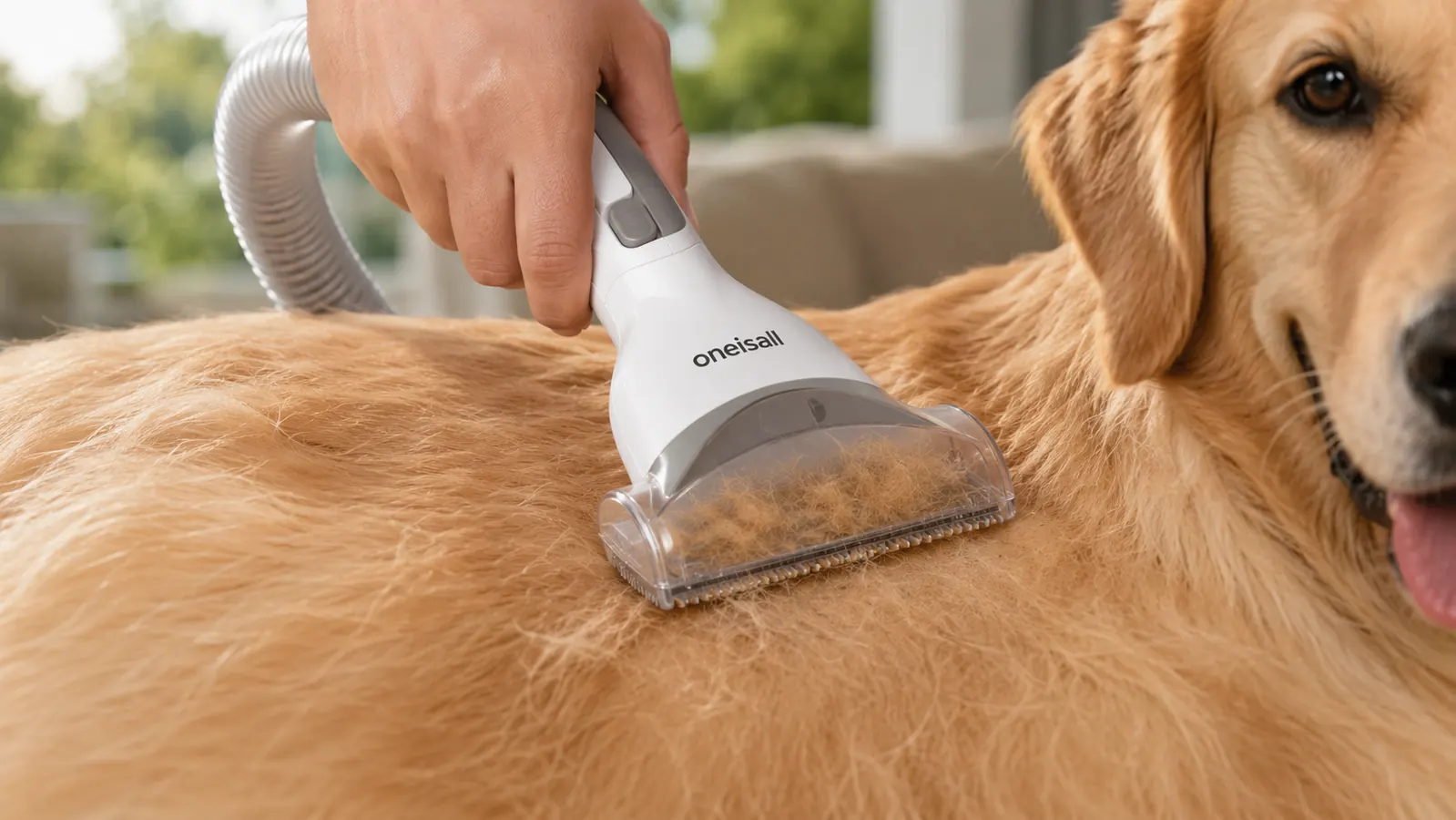
The deshedding brush is the one I use for 90 percent of Penny's sessions. It has medium-spaced tines that pull loose undercoat out cleanly without scraping skin. On a lab coat it performs well, and the suction captures what the tines dislodge so nothing floats away. The slicker brush I use occasionally for finishing after the deshedding pass, mainly to smooth the coat down. The grooming brush I tried twice and found it less effective at pulling out loose hair than the deshedding attachment, though it might work better on a longer or denser coat than Penny's.
The nail grinder and clipper attachments are real working tools, not props. I tested both. The nail grinder runs quieter than I expected and has enough torque for a medium-sized dog's nails. I already have a dedicated nail grinder I prefer for Otis's arthritis-sensitive feet, so I did not fold the oneisall grinder into my regular rotation. The clipper is functional for trimming paw fur and sanitary areas, but at the end of a vacuum hose it is not as precise as a standalone clipper. For someone who wants one unit for everything, both attachments earn their place in the kit. For someone who already has dedicated tools, they are nice extras.
The cleaning brush and flat nozzle are meant for furniture and upholstery, not grooming. I used the cleaning brush on my couch twice with decent results. It picks up surface fur, though it does not pull embedded hair out of woven fabric the way a dedicated pet hair remover does. I stopped reaching for them after week two and have not missed them.
Suction Over Six Weeks: Does It Hold Up
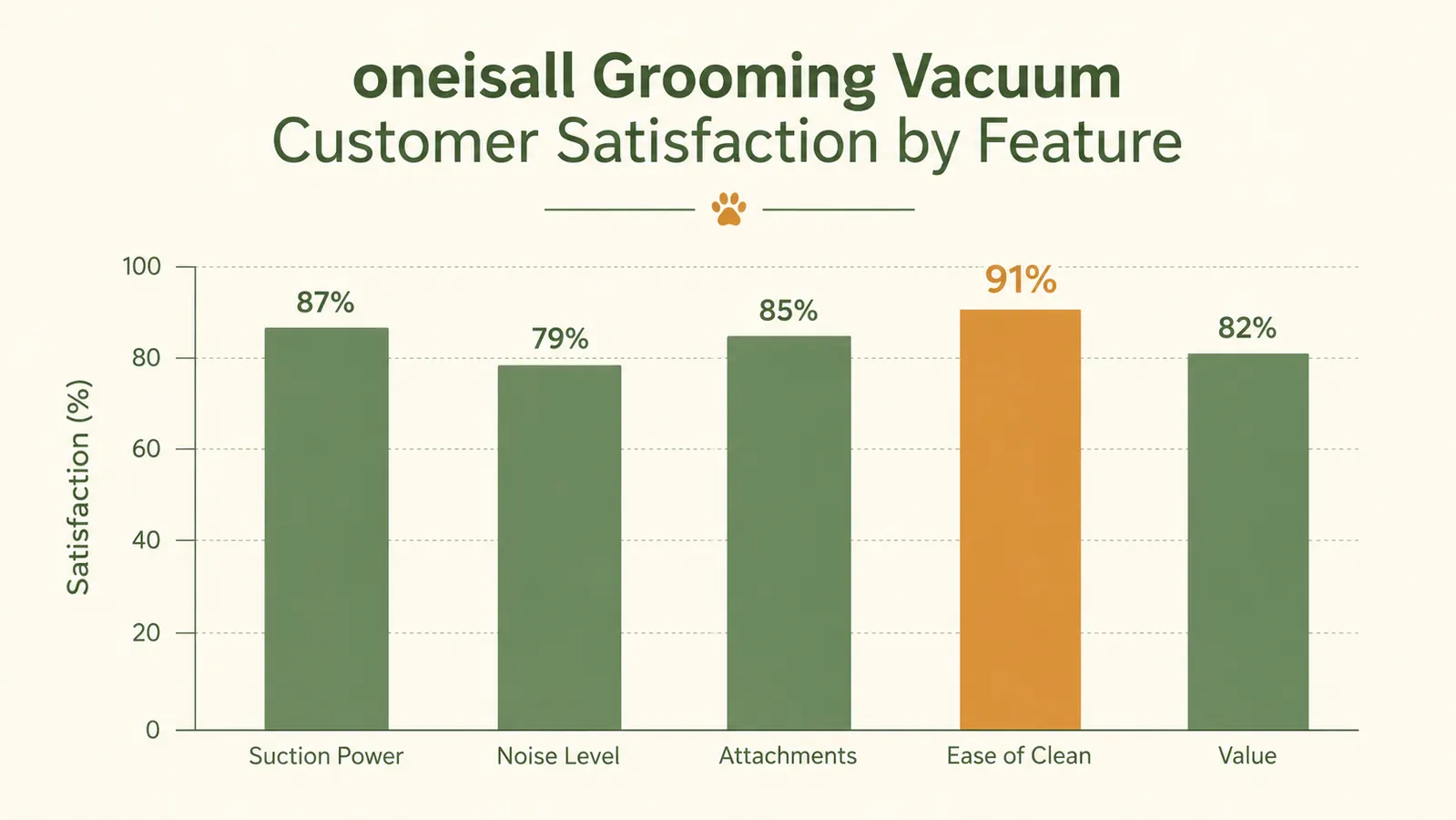
This was the question I was most focused on. Vacuum-based grooming tools have a reputation for losing suction as the filter clogs, which defeats the purpose of using one. Over six weeks, I noticed two things. First, the 1.5L canister is generously sized for a medium shedder. On Penny, a single eight-to-twelve minute session fills the cup to roughly 30 to 40 percent capacity. That means I empty it every two to three sessions rather than after every use, which is a more reasonable cadence than I expected going in.
Second, suction did noticeably drop in week three when I had let the filter go too long without cleaning. The kit includes a small cleaning brush, and once I wiped the filter screen and tapped it out over the trash, suction came back to its original level within minutes. The lesson: check the filter every four or five sessions. It takes about 90 seconds to clean. If you skip it for two weeks, you will feel the performance difference before you notice it visually.
Emptying the canister is simple. The bottom of the cup twists off, you tap the compressed hair disc into the trash, and you are done. I have not had a cloud-of-hair mess yet, which is more than I can say for a few other canister designs I have used in the clinic setting. The hair compresses into a tight cylinder inside the cup, so the whole operation takes about 20 seconds.
Check the filter every four or five sessions. It takes 90 seconds to clean. Skip it for two weeks and you will feel the suction drop before you notice anything visually.
Noise Acclimation: How Long It Took Penny to Settle Down
Penny is not a noise-shy dog by nature, but the vacuum unit runs at what I would estimate around 60 to 65 decibels at arm's length. That is noticeably louder than a dedicated pet nail grinder and quieter than a full household vacuum, somewhere between the two. Her first reaction was to stand up and take two steps away when I turned it on. She did not panic, but she was clearly uncertain about the whole situation.
I spent the first two sessions just running the unit near her without touching her with it, letting her sniff the hose and get used to the sound. By the third session she stood still for a short pass down her back. By session five she was sitting calmly through a full grooming session. Now, six weeks in, she lies down for most of it. The acclimation curve was shorter than I expected for a tool this loud. I credit the fact that I paired the sound with a brushing sensation she already found pleasant, rather than introducing it alongside something new and uncertain.
For dogs that are already noise-sensitive, I would plan for a longer acclimation period, probably two full weeks of casual exposure before expecting real cooperation. If your dog genuinely panics at household appliances, this tool will require patience or may not be the right fit at all.
Hair Capture: What the Numbers Actually Show
I kept an informal tally of how many times I needed to run my regular floor vacuum each week over the six-week period. In weeks one and two, before Penny was fully cooperative, I was still vacuuming the floor every three days as usual. By weeks three and four, I stretched that to every four to five days. By weeks five and six, I was going five to six days between floor vacuums. The floor hair situation improved noticeably, though it did not disappear. Penny sheds continuously, and grooming every other day captures the loose coat that has already released but does not stop new shedding from starting between sessions.
A realistic expectation: you will spend less time with the floor vacuum but not zero time. The tool cuts shedding at the source rather than eliminating it. For a heavy shedder like Penny, I estimate I capture roughly 60 to 70 percent of what would otherwise end up on the floor, furniture, and my work clothes. The other 30 to 40 percent still escapes between sessions or in areas I do not reach during a typical grooming pass.
Alternatives I Considered
Before landing on the oneisall, I looked at the Neabot P1 Pro and a Dyson attachment kit. The Neabot is in a similar price range and has a stronger suction motor, which appeals if you have a very dense coat. The trade-off is that the Neabot's attachments are heavier and the unit itself is bulkier to maneuver on a wriggly dog. The Dyson attachment route costs significantly more and requires owning a compatible Dyson vacuum, which not everyone does. The oneisall is a standalone unit with its own motor, meaning you do not need to own anything else first. For the price and the range of included tools, it cleared a practical bar that the others did not.
The comparison that matters most is versus doing nothing differently: just brushing with a standard slicker and letting the hair land where it lands. That approach is cheaper upfront but moves the cleanup problem from grooming time to floor-vacuuming time. After six weeks of using the oneisall, I am spending meaningfully less time running the floor vacuum. Whether that trade-off is worth the investment depends on how much loose hair your dog produces and how much the floor-hair situation bothers you.
What I Liked
- Deshedding brush captures loose coat at the source, reducing floor and furniture hair significantly
- 1.5L canister lasts two to three sessions on a medium shedder before needing to be emptied
- Suction stays consistent when the filter is cleaned regularly, no meaningful drop over six weeks
- Nail grinder and clipper attachments are functional working tools, not just decorative add-ons
- Canister empties cleanly without a dust cloud, hair compresses into a solid cylinder
- Standalone unit with its own motor, no compatible vacuum required
Where It Falls Short
- Runs at roughly 60-65 decibels, louder than dedicated grooming tools and may require two weeks of acclimation for noise-sensitive dogs
- Filter must be cleaned every four to five sessions or suction noticeably drops
- Cleaning brush and flat nozzle attachments underperform on embedded furniture hair
- Grooming brush attachment is largely redundant when you already have the deshedding brush for short coats
- Cord-only operation limits where you can groom if your home layout is awkward
Who This Is For
The oneisall grooming vacuum makes the most sense for owners of short-to-medium coated, moderate-to-heavy shedding dogs who already groom at home regularly and want to stop watching that session's loose hair end up on the floor. If you are spending five to ten minutes brushing your dog every other day and the hair still ends up everywhere, this kit lets you run that same session while capturing the output in a canister. The improvement in household hair load is real and measurable within two to three weeks. It also fits someone who wants a single unit that covers brushing, nail grinding, and light clipping, provided they go in understanding that grooming is the primary function and the other tools are secondary.
Who Should Skip It
If your dog is genuinely noise-phobic or reactive to appliances, the adjustment period will be long and the stress on both of you may not be worth it. If you have a long-haired dog with a dense double coat, the deshedding brush may struggle to penetrate to the undercoat the way a dedicated slicker or an undercoat rake would, and you may end up with a tool that looks impressive but does not reach the problem that is actually causing your hair situation. If cat grooming is your primary goal, manage expectations carefully. Miso tolerated it briefly at week four but nowhere near the cooperative level Penny reached after five sessions. The noise threshold that a lab mix shrugs off is a different threshold than the one a cat will accept on a Tuesday morning.
Six weeks in, the deshedding brush is still the first tool I reach for with Penny.
If your dog sheds heavily and you want to cut the time you spend fighting the floor vacuum every few days, the oneisall grooming vacuum is worth a serious look. Check today's price on Amazon.
Amazon Check Today's Price on Amazon →