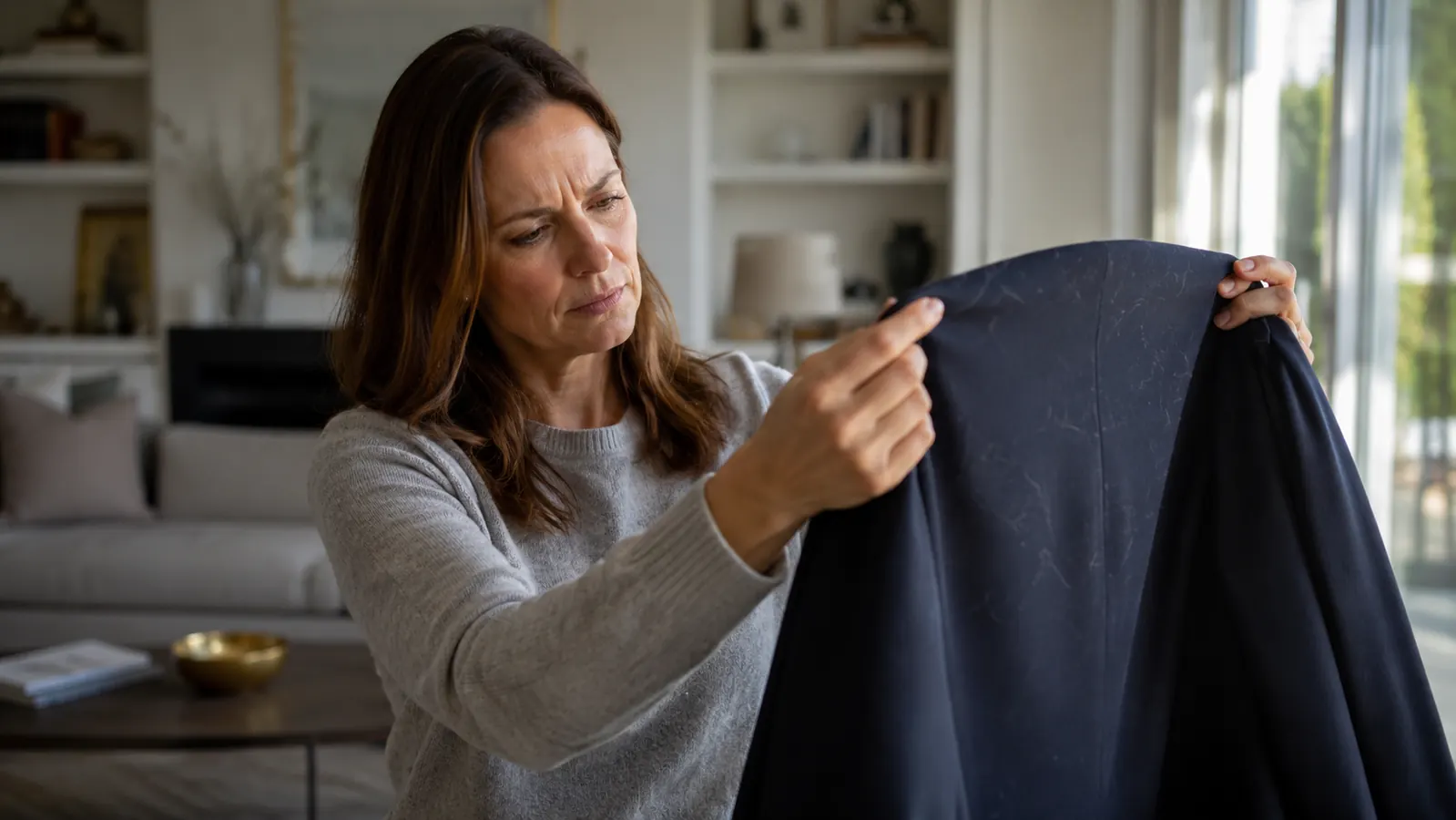
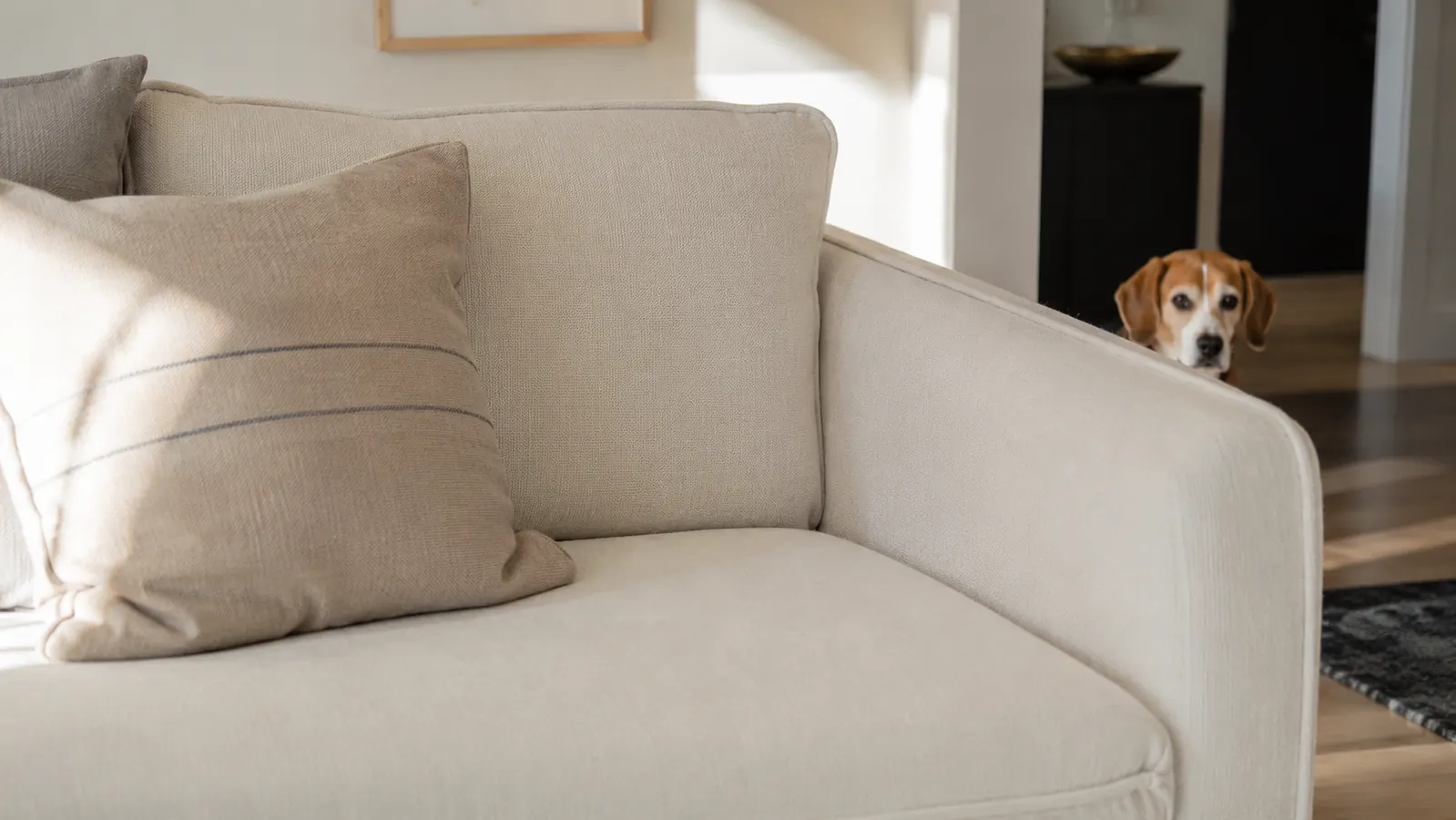
I have three pets and two dark couches. Miso is a long-haired Norwegian Forest Cat mix who treats every upholstered surface as a personal grooming station. Penny is a yellow lab mix who sheds in waves, heavy in spring and fall and then moderately all year in between. Otis is a beagle, so he sheds less dramatically but consistently, and his short stiff hairs embed into fabric like tiny barbs. Between the three of them, managing pet hair is less a chore and more an ongoing negotiation.
Over the years, working as a vet tech and then as a pet writer, I have watched people throw money at the wrong tools because nobody laid out a clear order of operations. The single biggest mistake is reaching for a damp cloth or a vacuum first. Moisture drives surface hair deeper into fabric before you have removed the bulk. You need to work dry first, then finish with moisture or suction only for what is embedded. That sequence is the backbone of everything in this guide.
The ChomChom Roller handles the dry-pull step on every surface, no refills, no waste.
Over 200,000 reviewers and counting. The ChomChom works on couches, car seats, fleece, and bedding. Self-emptying chamber, reusable forever.
Amazon Check Today's Price on Amazon →Step 1: Start Dry on Upholstery Before You Touch Anything Else
Before you vacuum, before you reach for a damp rubber glove, before you do anything, do a dry pass on your upholstered furniture. This removes the loose surface layer of hair that would otherwise clog your vacuum head or mat down further under suction or moisture. A dry pass takes two to three minutes per cushion and makes every subsequent step faster.
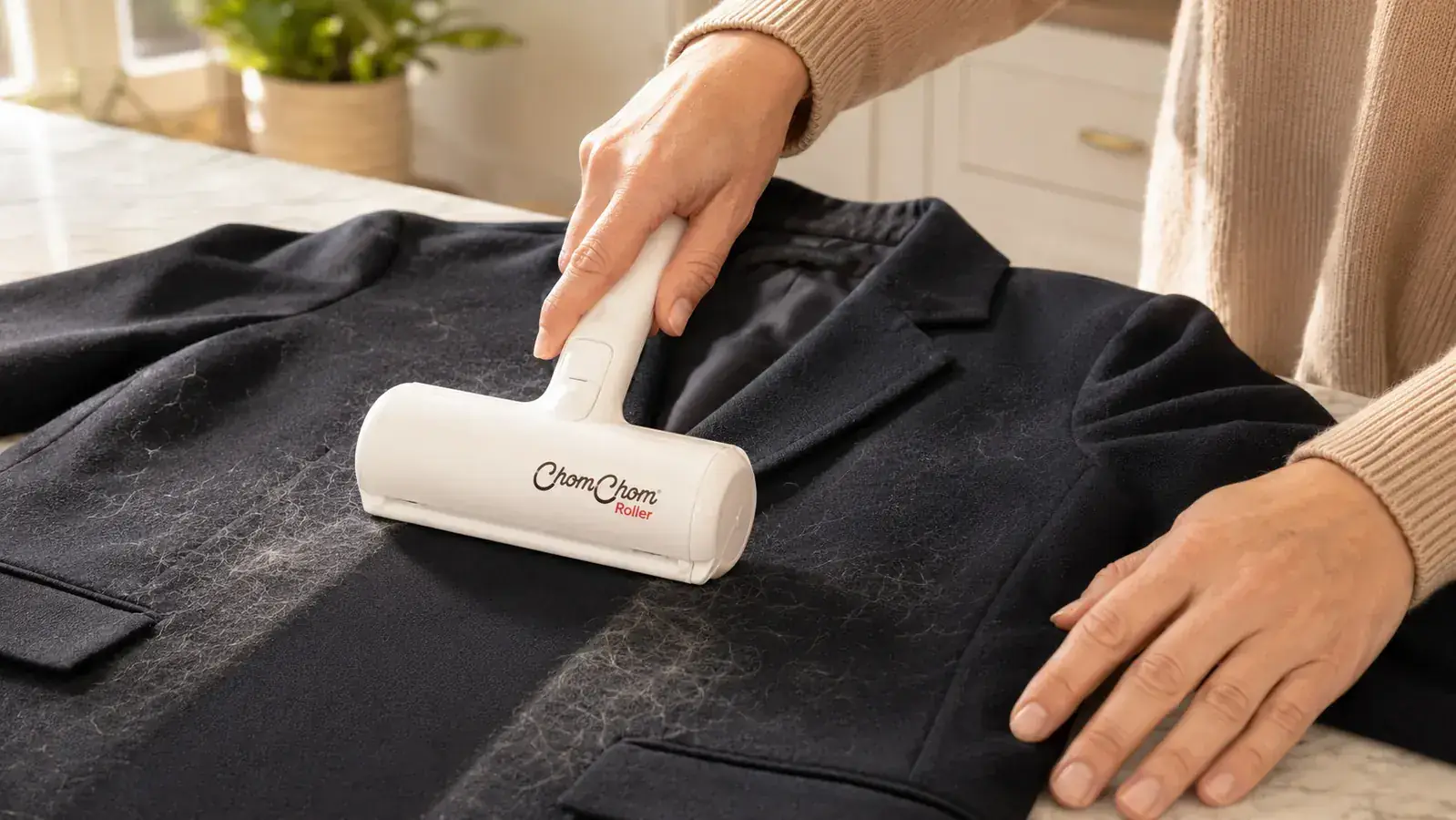
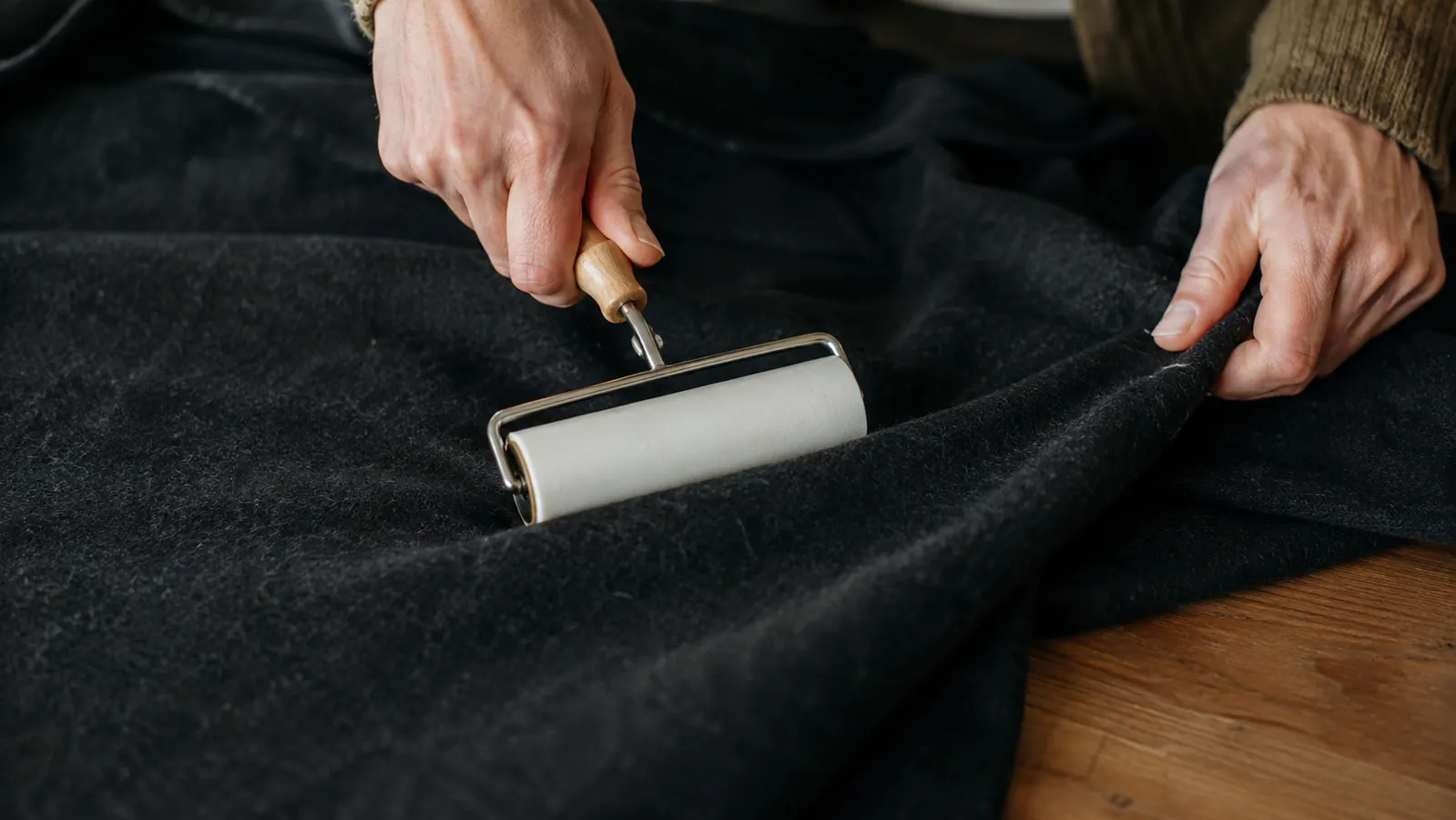
I use the ChomChom Roller for this step on every fabric surface in the house. It is a reusable lint roller with a self-emptying chamber, no adhesive sheets to replace. You push it forward and pull it back across the fabric, and the velvet-style picking surface lifts hair into a collection bin. When the bin gets full, you slide it open over a trash can and empty it. Takes about five seconds. On Miso's favorite couch cushion, I fill the chamber twice in one pass. That is how much surface hair is sitting there before I do anything else.
The key motion is back and forth in the same direction as the fabric nap, not circular. Circular strokes can push hair sideways into seams rather than lifting it out. Once you have done the dry ChomChom pass, that loose layer is gone and you can move to anything embedded deeper without fighting the surface layer at the same time.
Step 2: Roll the ChomChom Back and Forth Across All Upholstery, Including Seams
Once you have done the first-pass sweep, go back over the whole surface with the ChomChom in a more methodical, overlapping pattern. This time you are picking up hair the first pass missed, including at seam lines and piping edges where hair collects in dense ridges. Press the roller firmly into those seams and roll slowly. The collection chamber fills fast along seams because that is where hair accumulates for weeks between cleaning sessions.
Empty the chamber as soon as it is half full. A packed chamber loses picking efficiency quickly, and with Miso's long fine hair, a full chamber starts dragging rather than lifting. The whole point of the design is that emptying takes five seconds, so there is no reason to push the chamber past half. I empty mine three to four times on a single couch cleaning session. That sounds like a lot until you see the pile of hair in the trash can.
After the ChomChom pass, run your hand over the fabric. You should feel a noticeable difference in texture, smoother and cooler. Any hair you can still feel at this point is embedded below the surface fiber, which is where the next two steps come in. Do not try to get it all with the roller. The roller's job is the surface layer, and it does that job better than any other tool I have used.
Step 3: Empty the Chamber and Move to Clothes and Flat Fabric
With the ChomChom chamber empty and the furniture done, shift to clothing and other flat fabric surfaces: throw blankets, pillow covers, and any cotton or fleece items draped over furniture. These are often the worst offenders because people toss them in the wash without a pre-treatment pass, and then the hair balls up in the lint trap or, worse, redistributes onto other clothes in the drum.
The ChomChom works on most clothing fabrics, including denim, cotton twill, fleece, and knit. It does not work well on slippery synthetics like nylon or very loosely woven fabrics where the picking surface catches threads. For those, a strip of packing tape wrapped sticky-side-out around your hand is faster. But for fleece and cotton, which are Miso's favorite surfaces to sleep on, the ChomChom pulls clean in one pass.
For clothes destined for the wash, do the dry ChomChom pass first, then put them in the dryer on low heat for ten minutes before washing. The tumble action and heat loosen embedded hair and send it to the lint trap before water drives it deeper into the weave. This one step cut my lint trap cleaning from every load to every two or three loads. After the dryer cycle, wash normally. The wash cycle removes any remaining loose hair and the lint trap catches what the dryer shook loose.
Step 4: Tackle Car Seats With a Damp Rubber Glove or a Specialized Pass
Car seats are the hardest surface for pet hair removal. The fabric is tightly woven and often slightly textured, which means short dog hairs, especially Otis's wiry beagle coat, work their way in below the surface fiber and resist every dry-pull tool. The ChomChom removes the surface layer effectively here too, and I always start there, but car seats almost always need a follow-up step that upholstery sometimes does not.
The most effective follow-up for embedded car-seat hair is a damp rubber glove. Put on a standard latex or nitrile dish glove, dampen it lightly under a tap, shake off excess water, and rub it across the seat fabric in short strokes. The slight tackiness combined with the texture of the glove creates static that pulls embedded hairs to the surface. You will see a visible ridge of hair building up ahead of your hand. Scoop that into a trash bag. Repeat until the surface is clean. One glove, no product, no cost.
For seat seams and the gap between the seat bottom and seatback, a stiff-bristle brush or an old toothbrush loosens hair that neither the ChomChom nor the glove can reach. Brush the seam forward, collect the debris, and dispose. After these three passes, your car seat will be cleaner than it has been since the first week you had the car. I do my car seats about once a month and it takes under twenty minutes for both front seats and the back bench.
The single biggest mistake is reaching for a damp cloth or a vacuum first. Moisture drives surface hair deeper into fabric before you have removed the bulk. Start dry every time.
Step 5: Follow Up With a Vacuum for What Is Embedded in Carpet and Rugs
Carpet and area rugs are where hair truly buries itself, especially from dogs like Otis who have short, coarse coats. The individual hairs angle down and grip the carpet fibers, and a standard vacuum pass on its own often just moves them around rather than pulling them out. The fix is a pre-vacuum pass with either the ChomChom or a stiff rubber-edged carpet rake before you vacuum.
Run the ChomChom across area rugs the same way you would on upholstery: back and forth strokes with the nap, emptying the chamber as it fills. For wall-to-wall carpet, the ChomChom is less practical over large areas, and a carpet rake or stiff-bristled brush covers ground faster. The goal is to break up the embedded hair and lift it to the surface where your vacuum can pull it out cleanly. After the pre-pass, vacuum slowly and in overlapping strokes. You will see significantly more hair in the canister than you would get from vacuuming alone.
High-traffic areas, especially where Penny likes to sleep next to the couch, need this treatment once a week. Less-used rugs can go every two to three weeks. Skipping the pre-pass and relying solely on vacuum suction is what causes hair to felt into the carpet base over time, and once it gets that deep it takes a stiff rake and real effort to remove. The five-minute pre-pass prevents a thirty-minute deep clean later.
What Else Helps
The best hair removal session is the one you have to do less often. Two habits cut my between-cleaning hair load by more than half. First, regular brushing directly captures loose hair before it sheds onto surfaces. Penny gets brushed every other day during spring shed season with a deshedding tool. Miso gets a slicker brush once a week. Otis is easier, once a week with a rubber curry brush. Hair that comes off in a brush goes in the trash, not on your furniture.
Second, washable furniture covers on the most-used pet spots change the maintenance math entirely. I have a machine-washable cotton throw on each end of the couch where Miso sleeps. When it gets heavy with hair, I pull it off, do the dryer-then-wash method described in Step 3, and put it back. The couch underneath stays clean because the throw takes all the contact. This one change reduced my full couch cleaning frequency from weekly to about once every three weeks.
A high-efficiency air purifier with a HEPA filter also helps with the fine floating hair that never quite settles, the kind that finds its way onto dark clothes even when no pet has been near them. This matters most with long-haired cats like Miso, whose fine hair becomes airborne during grooming and drifts onto everything. Trapping it in the air before it settles cuts the hair load on every surface in the room.
Stop buying sticky-sheet rollers. The ChomChom costs less and never runs out.
Reusable, self-emptying, and effective on upholstery, car seats, fleece, and bedding. The dry-pull step that makes every other cleaning method work better.
Amazon Check Today's Price on Amazon →