
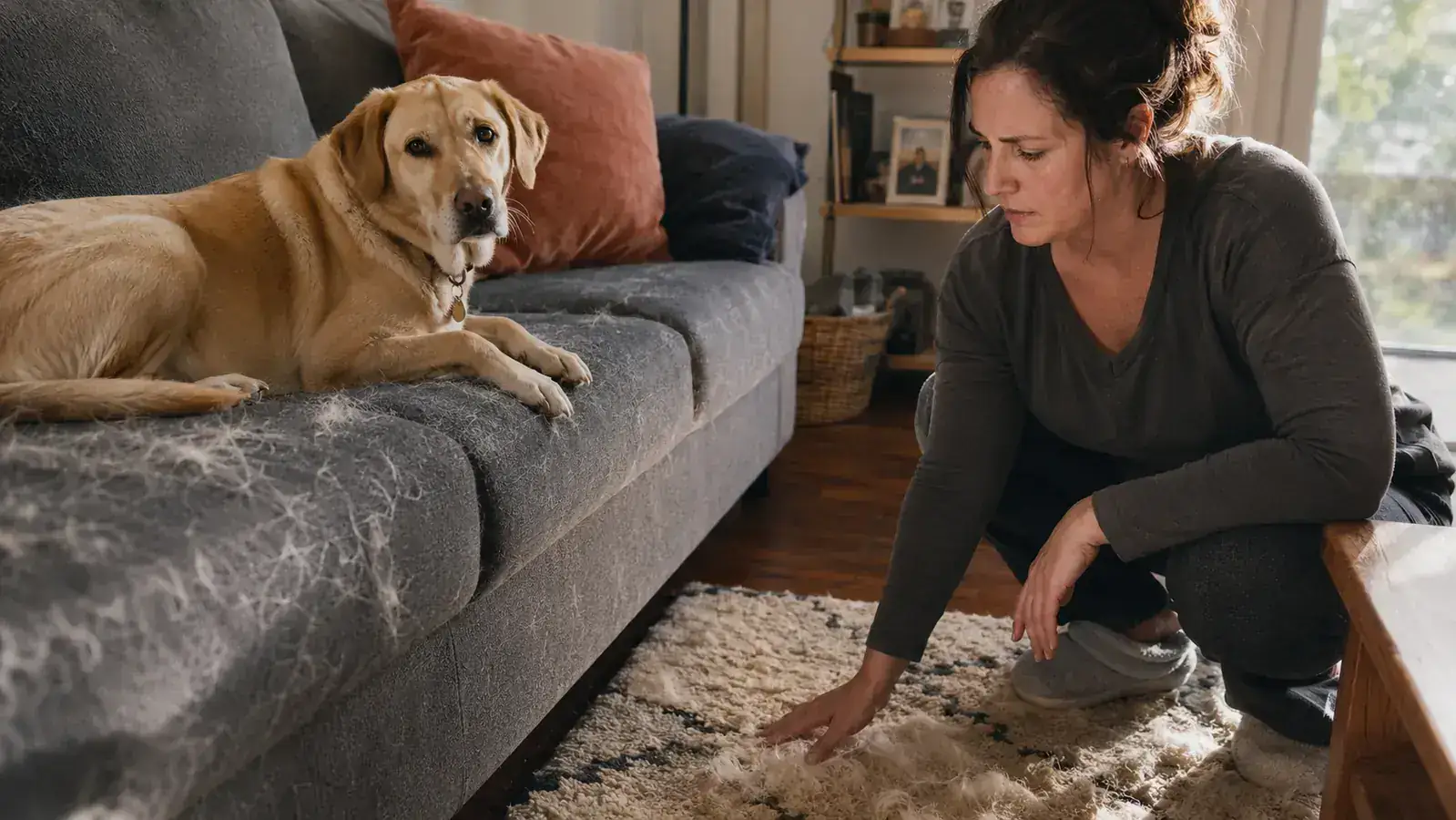
Every April, Penny blows her coat. If you have never lived with a high-shedding dog, I am not sure I can describe it accurately, but I will try: you run a hand down her back and come up with a palmful of pale yellow fur. You vacuum the living room and the floors look clean for about four hours before the tumbleweeds reappear in the corners. You open a window and watch the hair you just brushed off her back float lazily across the yard and then drift right back inside. I worked as a vet tech for nine years. I have bathed Saint Bernards and groomed Huskies in a professional setting. Nothing quite prepared me for owning Penny, a two-year-old lab mix who sheds like a Husky but is built like a retriever and has the energy of a puppy who somehow never got the memo. The thing that finally turned April from a losing battle into a manageable routine was a oneisall grooming vacuum, and I want to walk you through how we got there.
For two spring seasons I handled it the same way everyone handles it: brush outside. That advice makes sense in theory. The hair goes into the yard instead of onto your couch. Except that when there is any breeze at all, which there usually is in April, the loosened fur lifts right off the slicker brush and coats your clothes, your face, and the outdoor furniture you were trying to protect in the first place. By the time I brought Penny back inside, I had shed more than she had. My senior beagle Otis would watch the whole production from the doorway with what I can only describe as quiet judgment.
I tried four different brushes over those two years. A standard slicker. A rubber curry comb. A de-shedding rake that claimed to remove 90 percent of loose undercoat. An expensive pin brush from a pet boutique that felt luxurious and did approximately nothing. Each one had the same problem: they pulled the loose fur out of Penny's coat and then let it go somewhere else. Into the air. Onto the porch railing. Into my coffee. The hair was still loose. I had just relocated it.
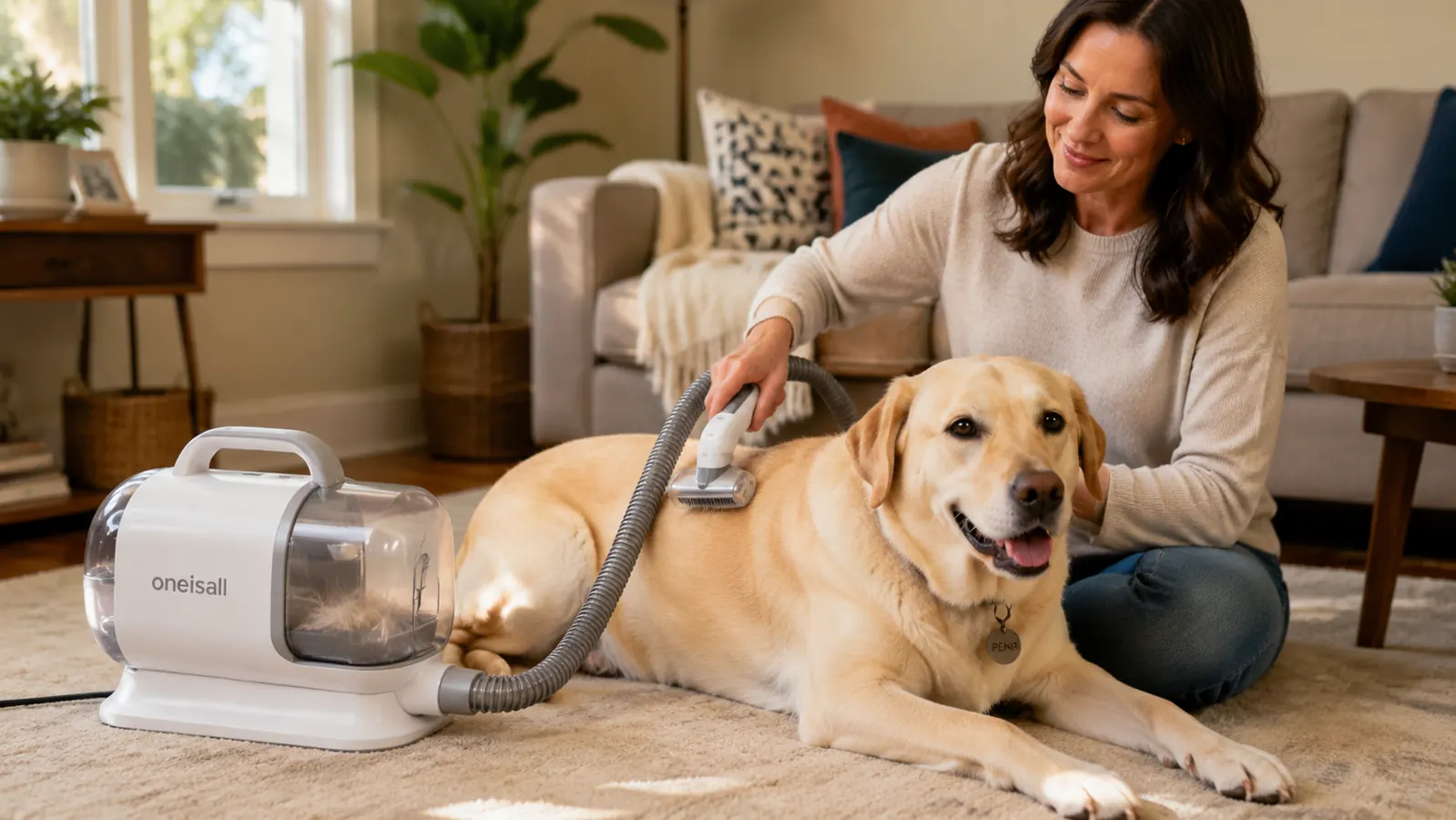
A colleague mentioned grooming vacuums. I had seen them advertised but always assumed they were loud, awkward, and something Penny would refuse within thirty seconds. She is not noise-sensitive exactly, but she is a young dog who still startles easily and has opinions about new things. I looked into the oneisall grooming vacuum kit after reading through a long thread of actual lab and retriever owners on a pet forum. The consensus was that it was quieter than expected and that the 1.5-liter canister was large enough to get through a full session without stopping to empty it. That last part sold me. I ordered it.
The first session was about what I expected: three minutes of actual grooming and twelve minutes of letting Penny sniff every attachment at her own pace. She startled when I turned it on, took three steps back, and stared at it. I kept the suction on the lowest setting and ran the grooming brush along my own arm first so she could see it was not doing anything alarming. By the end of that first session I had gotten maybe five minutes of real brushing on her flanks and shoulders. The canister held more fur than I had ever pulled out of her with a brush in a single go.
The hair goes into the canister, not into the air. That one difference changes everything about managing a heavy-shedding dog at home.
Tired of brushing fur off your dog only to find it on your couch an hour later?
The oneisall grooming vacuum captures loose fur at the source, before it has a chance to land anywhere. It comes with 7 grooming attachments including a deshedding brush, a clipper, and a nail grinder, all pulling into a single 1.5L canister. Rated 4.6 stars by over 13,000 pet owners.
Amazon Check Today's Price on Amazon →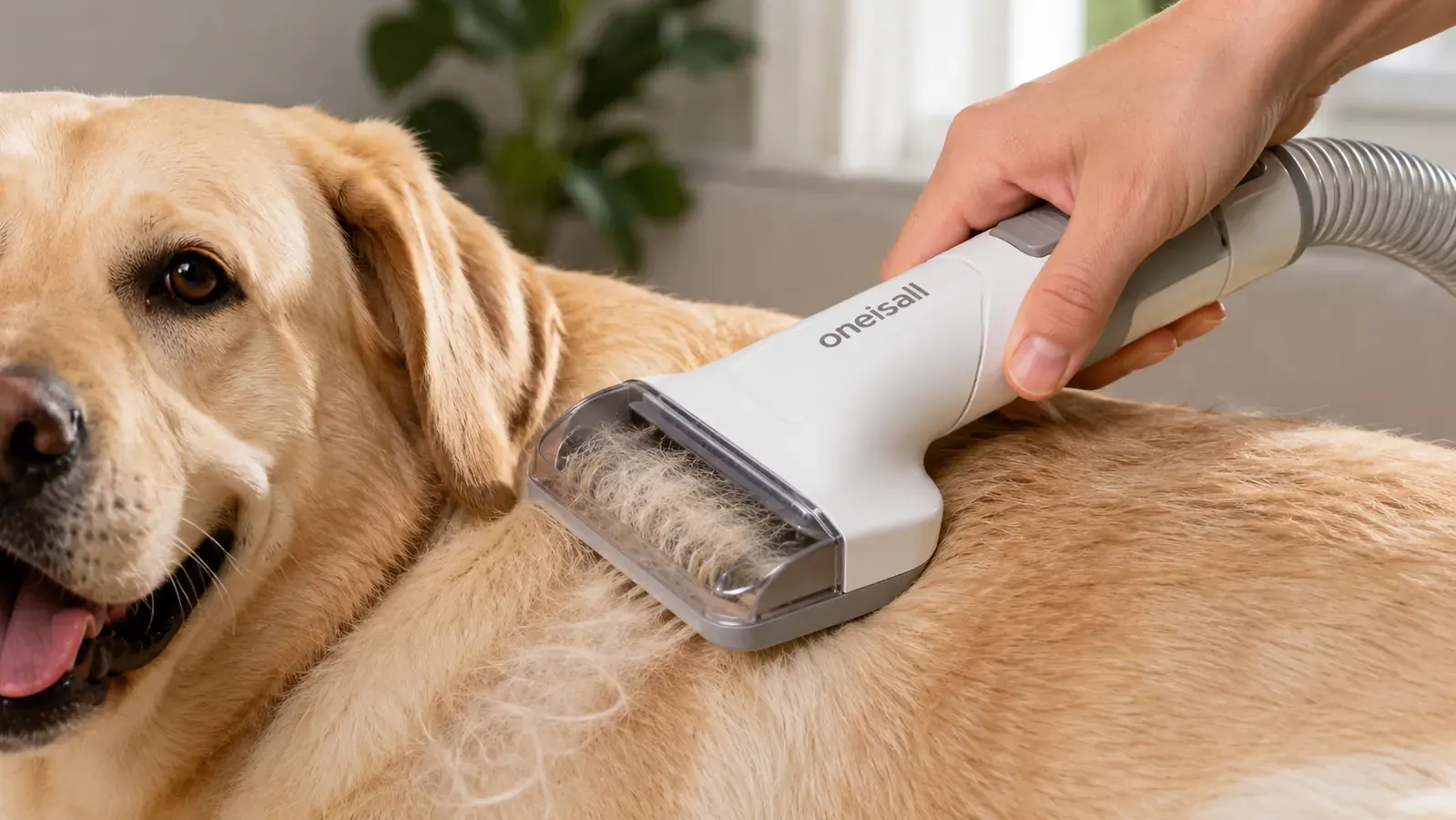
By the third session, Penny stopped startling at the sound. By the sixth she was walking toward me when I picked up the hose. I am not sure whether she associated it with the scratching sensation of the brush head or whether she just decided it was not worth worrying about, but the transition happened faster than I expected. I use the grooming brush attachment for her body coat and switch to the smaller nozzle for her chest and behind her ears where the fur is finer. Each session takes about fifteen minutes now. The canister fills up. I empty it, wash it out over the trash, and that is the end of it. No fur cloud. No tumbleweed migration to the far corners of the living room.
Otis watched one of the early sessions from across the room, decided it was not for him, and has stuck to that position. He is twelve years old and has earned the right to his opinions. Miso, my long-haired cat, disappeared when I first turned the unit on and did not reappear for two hours. I have not attempted to use it on her. Some battles you choose not to fight.
I will be clear about what it does not do: it is not a miracle. If Penny is in peak spring shed, one session does not make the shedding stop. The coat comes in waves for six to eight weeks, and the vacuum is managing it during that window, not ending it. The suction is real but not aggressive enough for a very thick double coat on a larger breed. I also think the clipper attachment is fine for light trimming but not something I would use for actual haircut work on a dog with a longer coat. The nail grinder is a useful bonus. These are honest tradeoffs.
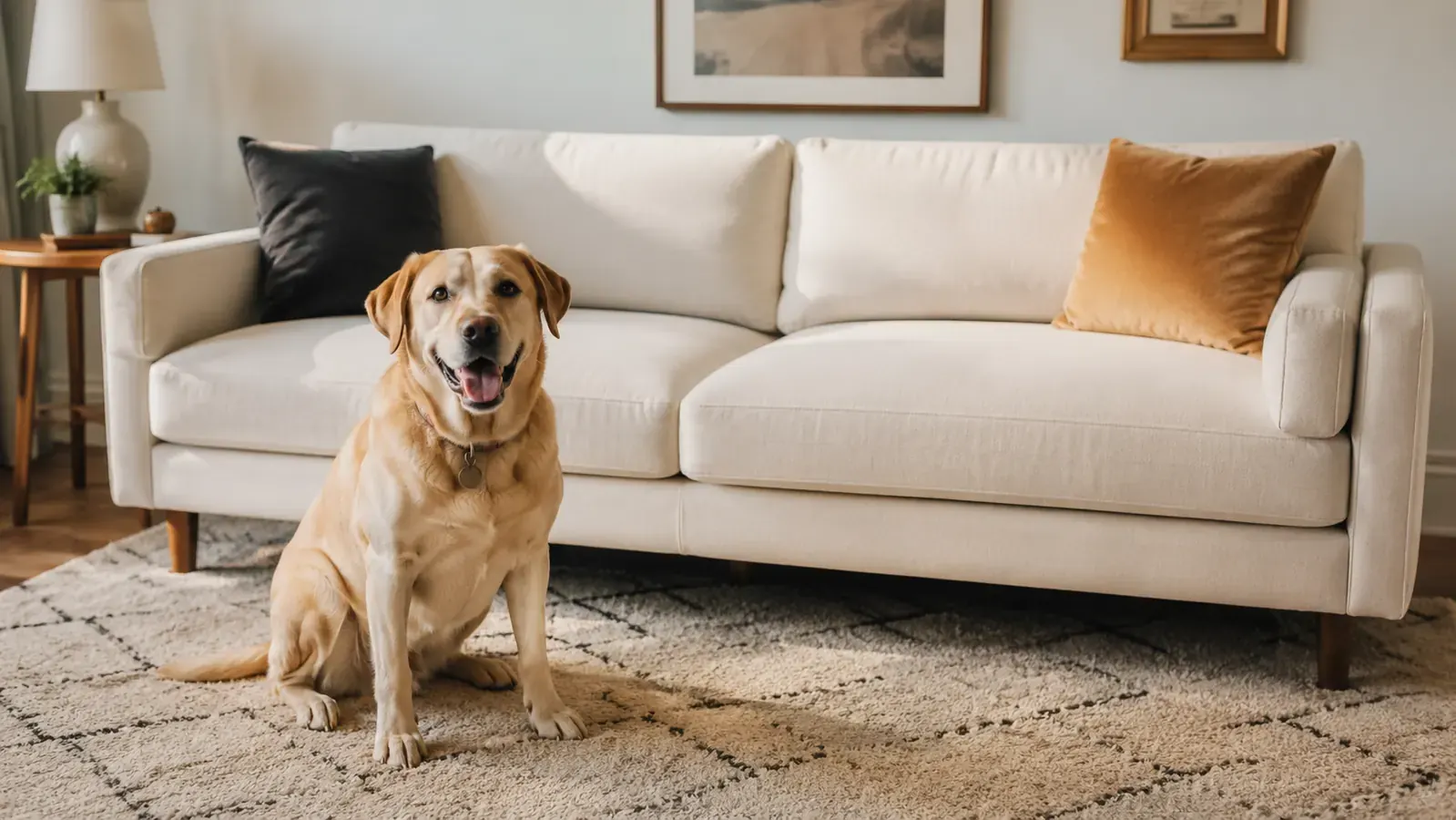
What it does do, reliably, is contain the shedding to the grooming session itself. The hair goes into the canister. It does not go into the air, onto the furniture, or into the corner where I will find it three days later. That is the thing I keep coming back to. Every brush I tried before was still a dispersal tool. This one is a capture tool. That is a different category of product.
I have not taken Penny to the groomer since March. The monthly appointments were running about eighty dollars by the time I factored in tip and the gas across town. I am not saying the vacuum pays for itself immediately, but I stopped writing that check four months ago and the house is cleaner than it was when I was paying someone else to handle it.
What I'd Tell You If We Were Sitting at My Kitchen Table
If you are dealing with a heavy shedder and you are still doing the brush-outside routine, I would tell you to look at a grooming vacuum. Not because it is easy from day one, it takes a few sessions for most dogs to settle into it, and some dogs never will. But if your dog can tolerate a normal blow dryer or a household vacuum running in the same room, there is a good chance they can adjust to this. The oneisall kit is not the only one on the market, but it is the one I use, it is priced reasonably for what comes in the box, and Penny tolerates it without drama. Start at the lowest suction setting, let the dog investigate every attachment on their own terms, and keep the first few sessions short. The grooming can happen faster once the dog stops caring about the noise. What you get on the other side is a tool that actually keeps the hair contained instead of just moving it around. After two years of fighting spring shed with brushes that redistributed the problem rather than solving it, that distinction matters a lot to me.
If your dog tolerates a vacuum in the same room, they can probably learn to tolerate this.
The oneisall grooming vacuum kit includes 7 attachments, a 1.5L collection canister, and adjustable suction. Over 13,000 pet owners rated it 4.6 stars. It ships with everything you need to get started in one session.
Amazon Check Today's Price on Amazon →